By Phuket News Property Editorial Team · January 24, 2026
Phuket’s property landscape has always been shaped by its geography. The island’s finite land supply, combined with coastal desirability and tourism appeal, has long influenced how neighbourhoods evolve. Since 2021, however, rising land prices have played an increasingly visible role in reshaping development patterns, buyer behaviour, and the overall character of the market.
While Phuket’s real estate sector has experienced multiple cycles over the past two decades, the post-pandemic period marked a distinct shift in momentum. As international travel resumed and long-stay living patterns changed, demand for well-located land accelerated. This has had a cascading effect across residential, hospitality, and mixed-use development.
Long-term land value growth sets the foundation
Independent Thai real estate valuation data shows that Phuket’s land prices increased by approximately 7.5 times between 2004 and 2024, equivalent to average annualised growth of around 10 percent over two decades. This long-term trend reflects sustained demand for coastal and lifestyle-oriented land across the island.
By 2021, this upward trajectory became more pronounced. With limited remaining land in prime west coast zones and heightened interest in spacious, lifestyle-driven living environments, land acquisition costs began influencing both pricing and project design more directly than in previous years.
Post-pandemic demand reshaped development choices
The years following 2021 saw a noticeable change in how developers approached new projects. Higher land costs encouraged denser planning, increased focus on branded and managed residences, and more selective site acquisition. Projects increasingly needed to justify premium land pricing through design, amenities, or lifestyle positioning.
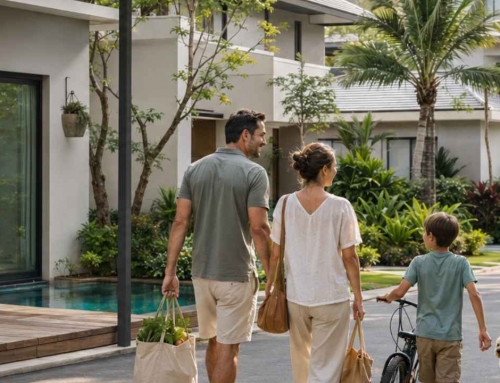
At the same time, long-stay international residents and relocating families became a stronger part of buyer demand. This supported neighbourhoods offering international schools, healthcare access, and everyday convenience, further concentrating land value growth in specific lifestyle corridors.
Neighbourhood evolution accelerated
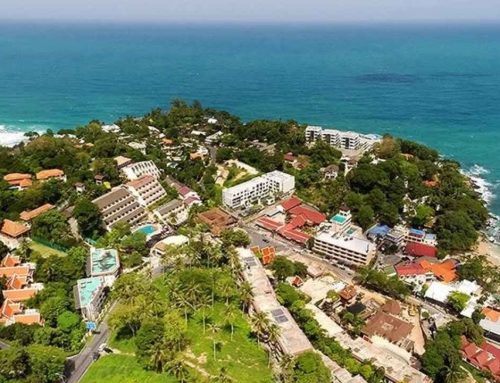
Rising land prices have also contributed to rapid transformation in areas that were previously quiet or lightly developed. Districts such as Bang Tao, Cherng Talay, and Layan have seen accelerated commercial and residential expansion as developers seek alternative coastal zones with remaining land availability.
This process has reshaped local infrastructure, road networks, retail clusters, and community services. In many cases, entire neighbourhood identities have evolved within just a few years, driven by land scarcity in older established districts.
Shifting buyer expectations
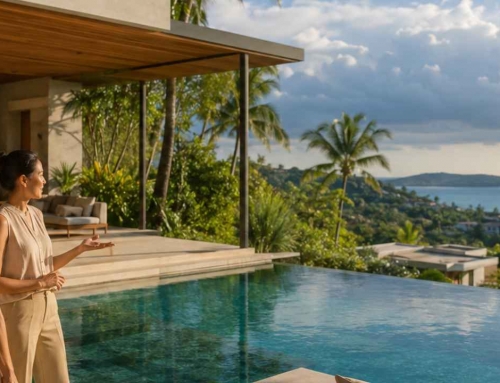
As land values increase, buyer expectations evolve alongside them. New projects are now more likely to incorporate lifestyle facilities, wellness services, co-working spaces, and managed rental options as part of their appeal. This reflects a market where land cost is a significant component of total project value, encouraging added experiential elements rather than simple residential supply.
This has subtly changed how Phuket’s property market presents itself, from purely accommodation-driven development toward broader lifestyle ecosystems.
A market shaped by finite space
Ultimately, rising land prices reinforce a central reality of island property markets: space is finite. As remaining undeveloped plots become scarcer, planning decisions, environmental considerations, and infrastructure capacity play a growing role in determining how Phuket continues to develop.
Since 2021, land pricing has therefore acted not just as a financial metric, but as a force shaping urban design, community planning, and the pace of change across the island.