
By Phuket News Property Editorial Team · March 4, 2026
In many property markets, interest rates are the dominant force shaping demand, pricing, and transaction volume. In Phuket, however, supply constraints play a far more influential role. While global interest rate cycles attract headlines, they often have less impact on Phuket’s property market than the simple reality of how little new supply can be added.
Understanding this distinction is essential when assessing market conditions on the island.
A market shaped by scarcity, not credit
Interest rates primarily affect mortgage-driven markets. In cities where buyers rely heavily on bank financing, changes in lending costs can quickly influence affordability, demand, and pricing behaviour.
Phuket operates differently. The market is largely cash-led, particularly in the condominium and lifestyle segments. Many buyers are foreign purchasers or long-term planners who are not dependent on local mortgage rates. As a result, shifts in interest rates do not automatically translate into increased selling pressure or rapid price adjustments.
What consistently matters more is how much property is actually available.
Natural and regulatory limits on new supply
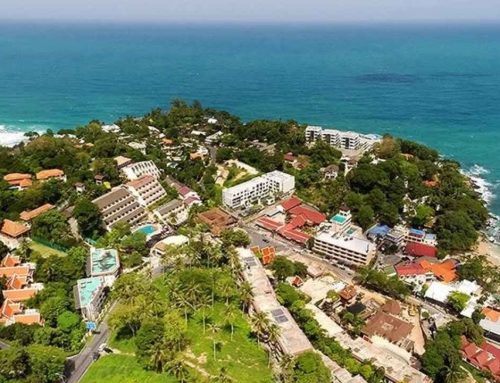
Unlike large urban centres, Phuket faces clear physical and regulatory constraints. The island’s geography, protected land, coastline restrictions, environmental regulations, and low-rise zoning all limit how much new development can occur.
These factors prevent rapid expansion, even during periods of strong demand. More importantly, they also prevent oversupply during quieter market phases. Developers cannot simply increase or reduce output in response to short-term signals in the same way they can in mainland cities.
Why slower demand does not equal falling prices
In mortgage-driven markets, reduced demand often leads to price corrections as inventory builds and sellers compete for fewer buyers. In Phuket, inventory levels tend to remain relatively tight, even during slower periods.
Because supply is constrained and many owners are not financially pressured to sell, prices often remain stable rather than falling sharply. Transactions may take longer, but sellers are typically willing to wait rather than discount aggressively.
This dynamic can be misread as stagnation when it is actually a sign of structural resilience.
Long-term ownership patterns
Another factor reinforcing supply stability is ownership behaviour. Many Phuket property owners hold assets for lifestyle use, retirement planning, or long-term family considerations. These owners are less sensitive to short-term economic shifts and interest rate cycles.
When fewer owners are forced to sell, supply remains controlled, further reducing the likelihood of sudden market corrections.
Interest rates still matter, but differently
This does not mean interest rates are irrelevant. They can influence buyer sentiment, currency dynamics, and investment decisions at the margin. However, their impact is indirect rather than dominant.
In Phuket, interest rates may affect how quickly buyers act, not whether supply suddenly increases. The underlying availability of property remains largely unchanged.
Why this matters for market interpretation
When headlines focus on interest rate changes or national housing slowdowns, it can be tempting to assume Phuket will follow the same trajectory. In reality, the island’s limited supply acts as a stabilising force, moderating both rapid rises and sharp declines.
Understanding supply constraints helps explain why Phuket’s market often moves more slowly, but with greater long-term consistency.
A market governed by limits, not cycles
Phuket’s property market is shaped less by financial cycles and more by physical and regulatory boundaries. Limited land, controlled development, and long-term ownership patterns combine to create a market where supply plays a central role.
In this context, interest rates influence behaviour at the edges, while supply defines the core structure of the market.