
By Phuket News Property Editorial Team · January 6, 2026
Thailand’s property market ended 2025 under continued pressure at the national level, but performance across the country remained uneven. While urban mass-market segments struggled with weak demand and tight credit, several regional markets continued to show relative resilience, highlighting a growing divide in how Thailand’s property sector is behaving.
Recent industry data and developer commentary point to a market that is no longer moving in unison, with local economic conditions and buyer profiles playing a greater role than national averages.
National picture remains constrained
Across much of Thailand, residential demand remained subdued through 2025. High household debt levels and stricter mortgage approval standards continued to limit purchasing power, particularly in lower and mid-priced segments.
Banks maintained cautious lending policies, and while government measures such as fee reductions and loan-to-value adjustments offered some support, they were not enough to fully offset structural affordability challenges. As a result, transaction volumes in many provinces remained below pre-pandemic levels.
Urban markets face inventory pressure
Large urban centres, especially Bangkok, continued to grapple with elevated unsold inventory. Condominium supply built up during earlier development cycles has taken longer than expected to clear, prompting developers to delay launches and focus on stock management rather than expansion.
Price competition and extended selling periods became more common in these markets, reinforcing a buyer-led environment where discounts and incentives were often required to close transactions.
Regional markets follow a different path
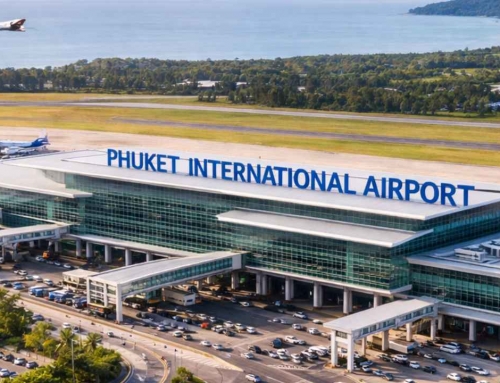
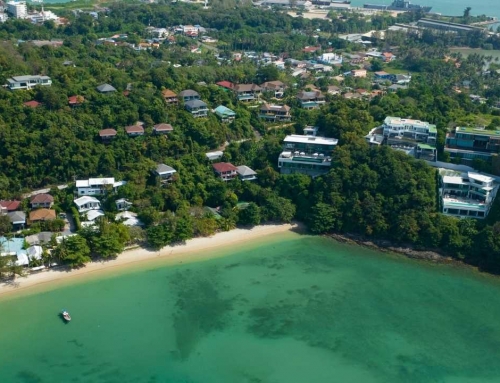
In contrast, several regional and lifestyle-driven markets performed more steadily. Coastal destinations such as Phuket continued to attract foreign buyers, particularly in condominium and villa segments designed for long-term use rather than short-term speculation.
Foreign transfers in Phuket remained active through 2025, supported by international travel recovery and sustained interest in lifestyle ownership. This demand has helped absorb new supply more effectively than in inland urban markets, even as broader national indicators remained weak.
Other resort-oriented locations, including parts of the eastern and southern seaboard, also showed similar patterns, with demand driven by a mix of domestic second-home buyers and international purchasers.
Developers adjust strategies
The contrasting conditions across regions have prompted developers to rethink their strategies. Many have shifted away from volume-driven residential projects and toward niche segments such as higher-end housing, resort-linked developments, and mixed-use projects with diversified income streams.
Caution remains widespread, but selective development continues in markets where demand fundamentals are perceived as stronger and less dependent on domestic credit conditions.
Outlook moving into 2026
Looking ahead, analysts expect Thailand’s property market to remain uneven rather than uniformly weak or strong. Credit conditions and household affordability will continue to shape mass-market performance, while regional and lifestyle markets are likely to remain more insulated from these pressures.
The divergence seen in 2025 suggests that understanding local market structure and buyer composition will be increasingly important for interpreting property trends in the year ahead.