By Phuket News Property Editorial Team · February 13, 2026
Residential gardens in Phuket today look very different from those of twenty or thirty years ago. Where earlier developments often featured simple lawns, a handful of shrubs, and practical shade trees, modern projects now present richly layered, highly photographic landscapes designed as lifestyle spaces rather than background greenery.
This shift reflects broader global design trends, changing buyer expectations, and advances in plant sourcing. In Phuket, it has also created a quiet transformation in how developers approach outdoor space as part of residential living.
Gardens have become designed outdoor environments
In earlier decades, gardens in residential projects were primarily functional. They provided shade, cooling, and a pleasant setting, but design was usually secondary to practicality. Today, landscape architecture is planned as an extension of the home itself.
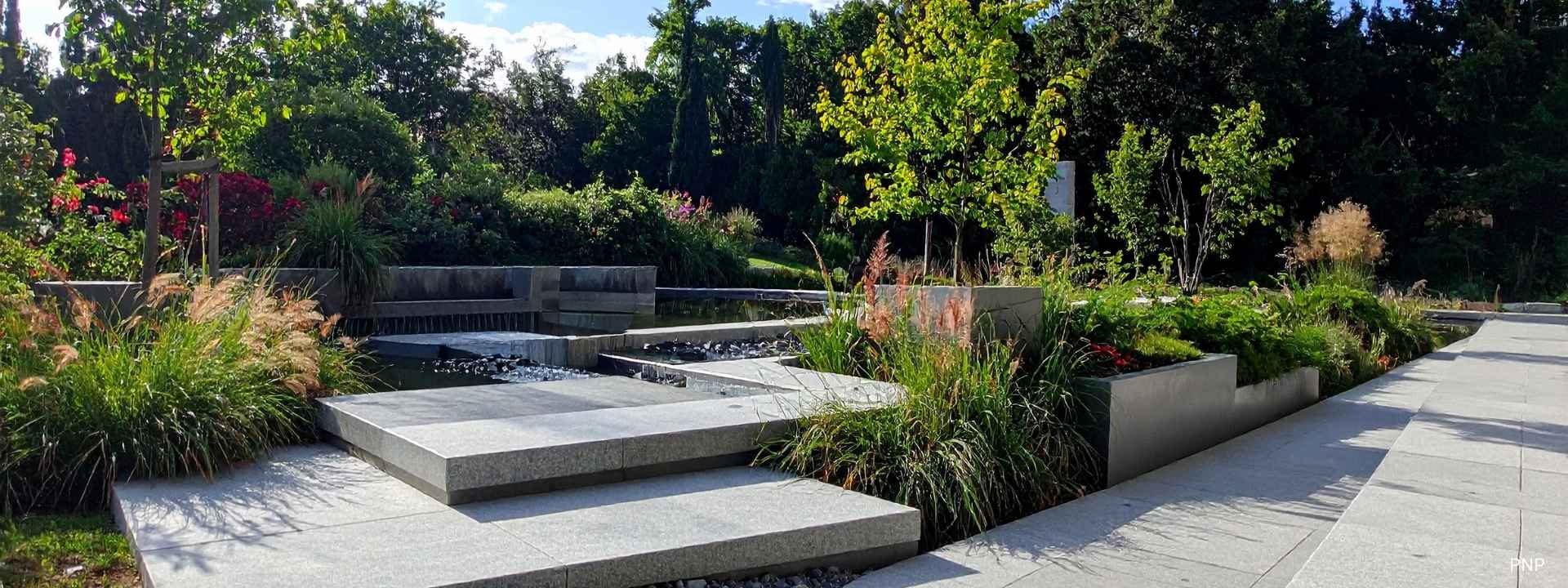
Modern gardens are composed with intentional structure. Pathways, seating zones, water features, lighting, and layered planting schemes create outdoor rooms rather than simple green space. This approach encourages daily use of the garden rather than viewing it as a decorative border.
Plant palettes are broader and more expressive
The range of plants used in contemporary landscaping has expanded dramatically. Creepers, climbing vines, sculptural palms, ferns, and textured foliage now form the backbone of many garden designs. The emphasis is on height variation, contrast, and movement rather than uniform hedging.
This variety creates gardens that feel immersive and visually rich. It also produces landscapes that photograph well, which has become increasingly relevant in a digital-first property market where imagery plays a key role in presentation.
Naturalistic planting has replaced formal layouts
Older gardens often followed rigid patterns. Straight hedges, clipped borders, and open lawns were common. Modern landscape design favours more naturalistic groupings, with plants arranged in organic clusters that mimic forest or tropical understory environments.
This approach softens architectural lines and creates gardens that feel mature and established more quickly. It also aligns well with Phuket’s tropical climate, where lush growth is part of the island’s identity.
Developers now source mature plants from other provinces
Another significant change is how developers acquire planting stock. To achieve full, established gardens from day one, many projects now source mature trees, palms, shrubs, and groundcover from specialist nurseries in other provinces.
This allows developers to control costs while still delivering high-impact landscapes. It also ensures consistency across large projects where local nursery supply alone may not meet volume or size requirements. The result is gardens that look complete immediately rather than evolving slowly over many years.
Lawns have become secondary to layered planting
Traditional grass lawns remain part of many gardens, but they are no longer the dominant feature. Groundcovers, stone, decking, water elements, and dense planting beds now share space with smaller lawn areas.
This reduces maintenance requirements while creating gardens that feel more visually dynamic and less dependent on constant trimming and watering. It also supports more biodiversity and better shade management in tropical conditions.
Gardens have become part of lifestyle identity
Perhaps the most important change is how gardens are now viewed as part of lifestyle rather than decoration. Buyers increasingly value outdoor dining terraces, shaded seating areas, poolside planting, and private green outlooks as part of everyday living.
As a result, garden design is now integrated into architectural planning from the earliest concept stage, rather than added at the end of construction.
A visual transformation that reflects changing expectations
The overall effect of these shifts is clear across Phuket’s residential landscape. Gardens are now richer, more textured, and more immersive than in previous decades. They contribute to atmosphere, privacy, and wellbeing, while also enhancing the visual identity of a development.
As buyer expectations continue to evolve, garden design has become not only an aesthetic choice but a defining element of modern residential environments on the island.